This is among one of the most crucial yet the very least talked-about services in modern construction. In this blog, we will discuss what diaphragm wall services are, exactly how the process works, when your task needs one, and what to search for when hiring a d wall construction service provider.
A diaphragm wall (additionally called a D Wall) is a thick, continual concrete wall surface constructed underground prior to the primary construction begins. It is developed straight into the ground using special equipment and functions as a structural barrier that.
Think about it as the below ground foundation of a structure or framework project. Diaphragm wall surfaces are typically utilized in midsts ranging from 10 meters to 50+ meters, relying on the project demand. This is actually efficiently performed D Wall construction up to 41 meters deepness for the Chennai City project.
D Walls form the side walls of underground terminals and passages where conventional excavation is impossible.
Tall structures with 3 – 5 basement levels need diaphragm wall surfaces to securely dig deep into deep without troubling surrounding structures.
Structure job near rivers or in waterlogged areas advantages considerably from D Wall construction.
D Walls work as cut-off obstacles to stop seepage with the soil listed below dams.
Big business jobs with multi-level below ground car parking use D Walls to retain surrounding soil.
The wall is constructed of panels. Each panel is linked to one another to create one continuous wall.
Nuclear power plant, refineries, and hefty facilities projects near water bodies use diaphragm wall surfaces as part of their deep foundation systems.
Not every project needs the exact same kind of D Wall solution. Right here are the major types of diaphragm wall services used in India.
These wall surfaces are constructed just to support excavation throughout construction. Once the irreversible framework is in area, the D Wall surface’s role as a retaining obstacle ends. These are common in framework jobs with large open locations.
Right here, the D Wall itself becomes part of the final framework– the basement wall surface, tunnel lining, or retaining structure. This is much more affordable because you obtain 2 gain from one building and construction, excavation support and permanent wall surface.
Occasionally, secant pile walls are integrated with diaphragm wall services when the ground problems need a more versatile technique. GKV Infrastructure gives a series of geotechnical services that can be integrated based upon site problems.
These are especially developed to avoid water infiltration typical in dam structures and seaside building and construction jobs.
Understanding how D Wall construction in fact functions aids you appreciate why proper experience and tools issue so much.
Prior to any excavating begins, geotechnical designers research the dirt, groundwater levels, and surrounding frameworks. Based upon this information, the D Wall design is completed consisting of the depth, density, and panel design.
2 shallow concrete guide walls are improved the surface area along the placement of the D Wall surface. These guide walls serve as a referral track for the grab device and help maintain the precision of the excavation.
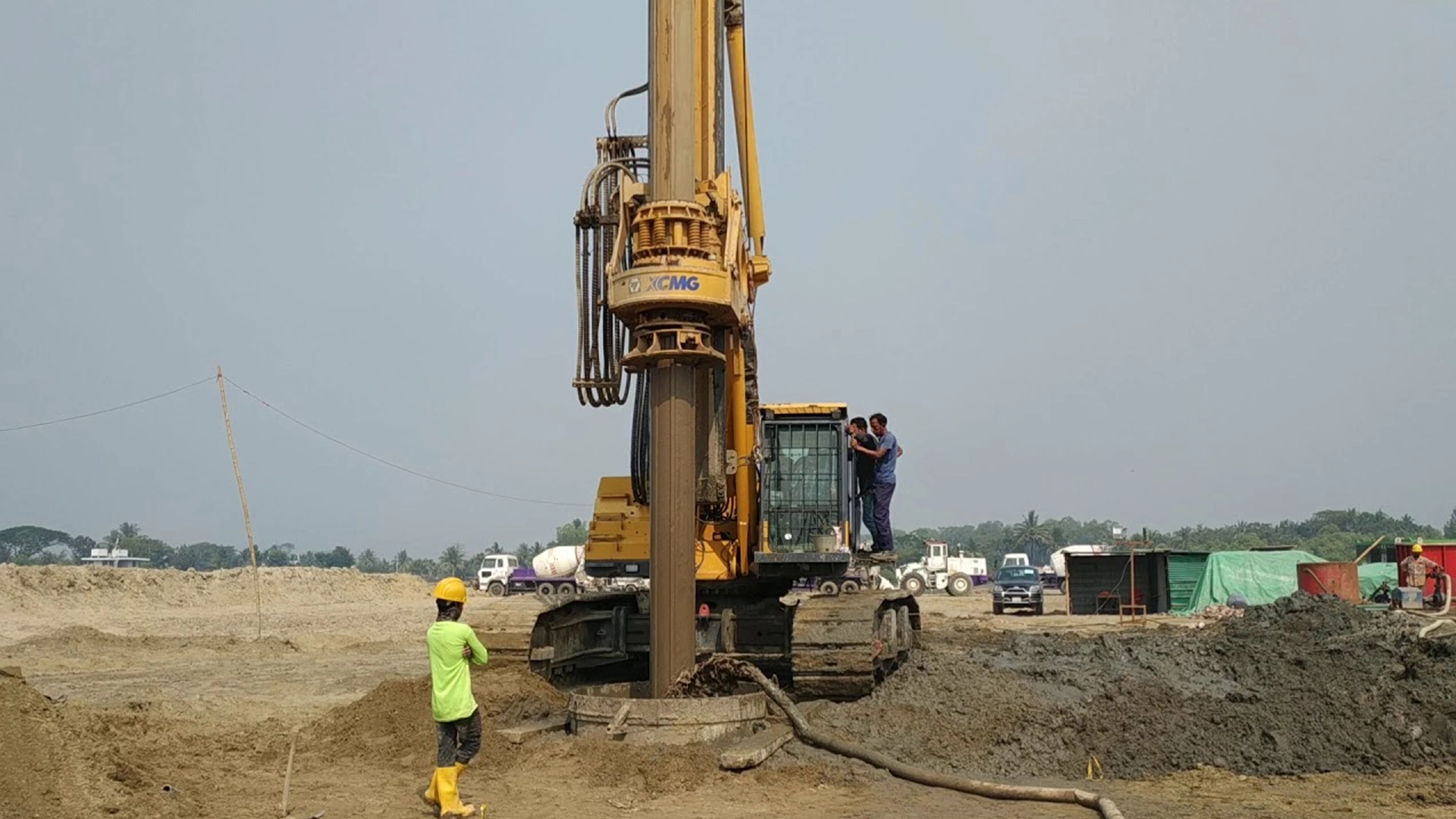
This is where the genuine action occurs. A diaphragm wall grab machine (also called a hydraulic clamshell) is utilized to excavate the soil panel by panel. Each panel is typically 3 to 7 meters vast and excavated fully needed depth.
During excavation, the trench is full of bentonite slurry a unique liquid that maintains the trench walls steady and protects against collapse. Without bentonite slurry, the dirt would certainly collapse promptly.
As soon as the panel is excavated to the required deepness, a pre-assembled steel reinforcement cage is reduced right into the trench. This cage offers the D Wall surface its architectural strength.
Diaphragm walls are strong and require little maintenance.
Concrete is poured into the trench utilizing a tremie pipeline, starting from all time low and rising upwards. As the concrete increases, it pushes the bentonite slurry out of the top. The result is a solid, well-reinforced concrete panel underground.
Each panel is connected to the following utilizing unique end-stop pipelines or water-stop joints that develop a leak-proof seal between panels.
The quality of your D Wall surface is directly connected to the high quality of the devices being utilized. Here is what a proper D Wall construction provider must have.
Utilized for extremely deep or hard-rock D Wall tasks where a grab machine might not suffice.
Manages the slurry utilized to stabilize the trench during excavation.
Makes sure concrete is positioned accurately from all-time low up without segregation.
For placing the support cage precisely right into the dug deep into trench.
Big business jobs with multi-level below ground car parking use D Walls to retain surrounding soil.
GKV Infrastructure maintains a fleet of 247+ tools, consisting of advanced grab equipments and concreting systems that allow us to implement D Wall surface tasks to the most requiring specs.
A preserving wall surface is a general term for any type of wall that holds back soil. A diaphragm wall is a particular type of preserving wall surface built underground utilizing slurry-supported excavation. It is much more powerful, deeper, and a lot more watertight than standard retaining wall surfaces.
Diaphragm walls can be created to depths of 10 to 80 meters depending on dirt problems and equipment capacity. GKV Framework has performed D Walls as much as 41 meters depth for metro rail tasks.
The timeline depends on the overall panel count, dirt problems, and equipment. For a regular mid-size project, expect 4-12 weeks. Large metro or facilities projects might need 3-6 months.
Yes. When effectively created with water-stop joints in between panels, a diaphragm wall gives exceptional waterproofing– among the crucial reasons it is preferred for below ground city terminals and cellar building and construction.
Diaphragm walls can be integrated in nearly all dirt types soft clay, sand, gravel, and also soft rock making them among one of the most functional geotechnical solutions offered.
Expense depends on deepness, thickness, dirt conditions, project place, and overall panel location. Get In Touch With GKV Infrastructure at +91 9727254900 or email sales@gkvinfrastructure.com for a detailed task quote.
Absolutely. In numerous tasks, the D Wall is developed from the start to serve as the irreversible cellar boundary wall– removing the requirement for different retaining wall surface building and conserving time and cost.
Diaphragm wall services are at the heart of contemporary deep structure and below ground building in India. Whether it is a metro passage, a high-rise cellar, or a dam structure D Wall construction offers the depth, strength, and waterproofing that nothing else technique can match at range.
If your project requires diaphragm wall services, it is crucial to collaborate with a firm that has the experience, devices, and technological group to get it right because underground, there is no space for mistake.

We’re here to assist you and answer any questions you may have. Submit this form to send us your Inquiry.
You can also call us at +91 97272 54900.

 Get in Touch


